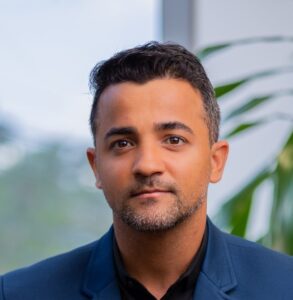
Philosopher John Gray: ‘We’re not facing our problems. We’ve got Prozac politics’
So maybe it’s motivated by concern for the Palestinians—but it seems to be motivated by other impulses, which include those which are inculcated by progressive ideology, according to which the principal (if not almost the only) source of injustice and evil in the world is the West. So it’s a very terrible and tragic situation, of a kind that does recur in history and is recurring now. So what one could have, I suppose, is a punishing and humanly very, very costly war going on for a long time. But I do see it as very profound to use the word that you used earlier, cul-de-sac—that’s what they’ve gotten themselves into. But that’s why he said it should be unilateral.
Which is that people spend their lives in this universal library looking for the random book which actually makes sense. It is less clear that An Interview with John Gray: ‘Human Progress Is a Lie’ all humans in all times and places have wanted freedom, in the sense that Western liberals use the term, or political self-determination, especially when those values conflict with security and material comfort, as they often do. This changed with Christianity, which is unmistakably a creedal faith, but even here New Atheists misunderstand what “belief” has meant to most Christians throughout history, treating religious doctrine as a series of statements about reality, many of which science has subsequently disproven. To some readers this may sound almost tautological, but as Gray points out, the denial of the existence of a transcendent god is not inherently a denial of religious truth, because not all religions are theistic.
Yet most humans who have ever lived have not believed this – and a great many have had happy lives. Humanism is not science, but religion – the post-Christian faith that humans can make a world better than any in which they have so far lived. Humanists like to think they have a rational view of the world; but their core belief in progress is a superstition, further from the truth about the human animal than any of the world’s religions. It’s a book that takes a hammer to our preconceived notions and the conventional wisdom that we rarely take the time to reexamine. In that sense it’s a more credible view than this utterly bizarre nonsense about uploading our minds into cyberspace.
Would you say the myth of progress is sort of a religion in itself? But human beings need meaning in life. Behind every myth, there is this demand for the meaning of life. You don’t think it’s concealed imperialism? People regard him as a liar, but I believe that’s too much of a compliment.
Do you agree with John Gray, or is this an overly pessimistic view of humanity? “There is more honesty and rigor in the occult sciences than in the philosophies which assign a ‘meaning’ to history.” (Emil Cioran) “Humans don’t always adapt well to industrialisation, but pretty much all humans want the benefits of industrialisation. They want clean water, they want long lives, they want warm rooms, and, let’s be frank, they also want a high-stimulus environment. I can’t imagine what life is like in an immobile village in the medieval period. But it would be a very low-stimulus environment, in which people are stuck. There’s no room for romantic nostalgia here. He also reserves a degree of disdain for protest politics, not because it never succeeds in getting its point across – Gray fully accepted the evidence of global warming early on, for example – but because he is suspicious of movements that people join in order to find psychological satisfaction and “give meaning to their lives”. He grandly insisted on booking a room in “the Wylie building” for our interview.
Best of The New York Review, plus books, events, and other items of interest One such time was late European antiquity, when Christianity contended with Greco-Roman philosophies and mystery religions. This may seem a selfish attitude; but it makes sense in a time of endemic instability, when political systems cannot be expected to last. Human nature may change over time, but there is no “upward” trajectory to these changes, nor could there be, because there is no objective hierarchy by which such a trajectory could be judged. In fact, there is no such thing as “humanity”; there is just an endless variety of individual humans, going about fulfilling their wants and needs in much the same way as other animals do.
Today, liberal humanism has the pervasive power that was once possessed by revealed religion. Civilization is not a permanent state of being, but something which can quickly recede during a time of stress. In any case, I agree about progress being a myth and that thinking people have “unthinking ideas.” An assault upon that cluster of annoying ideas has been a long time coming. Happily, humans will never live in a world of their own making. Political action has come to be a surrogate for salvation; but no political project can deliver humanity from its natural condition.
In terms of technology, there’s a continuous transformation of our actual everyday life. Phones are getting better, smaller and cheaper all the time. The whole of human history up until the Enlightenment was a prelude to us.
“Unbelief today,” Gray has written, “should begin by questioning not religion but secular faith.” These books tend toward the aphoristic and are more apt to quote Jorge Luis Borges or Wallace Stevens than Friedrich Hayek or John Maynard Keynes. Over the past two decades, at the end of a long career as an academic political philosopher, John Gray has written a series of short, studiously unacademic books with suggestive titles like Straw Dogs, The Silence of Animals, and The Soul of the Marionette. The future, he warns, is not destined to be better than the past.